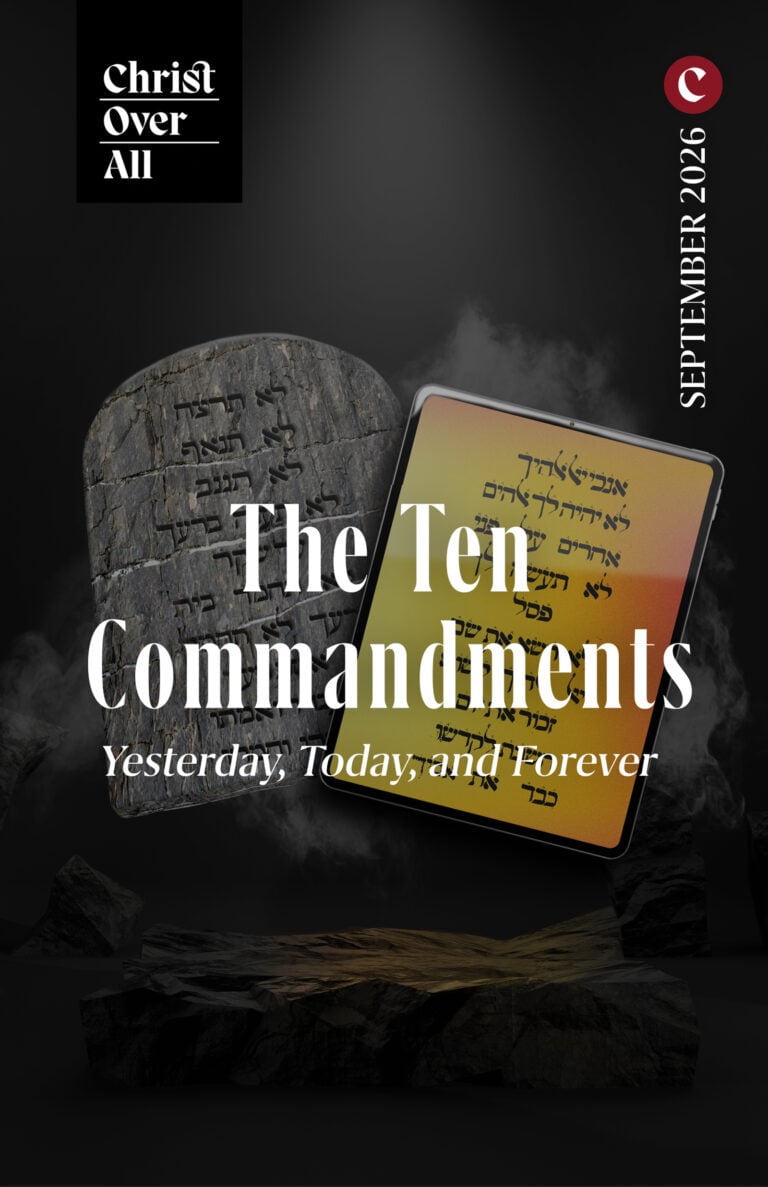
How to Use the Law Lawfully (1:8–11)
Now we know that the law is good, if one uses it lawfully, understanding this, that the law is not laid down for the just but for the lawless and disobedient, for the ungodly and sinners, for the unholy and profane, for those who strike their fathers and mothers, for murderers, the sexually immoral, men who practice homosexuality, enslavers, liars, perjurers, and whatever else is contrary to sound doctrine, in accordance with the gospel of the glory of the blessed God with which I have been entrusted. (1 Tim 1:8–11)
A key part of this passage is a pun in v. 8: “the law is good, if one uses it lawfully.” What does it mean to use the law lawfully? It means to use the law “properly” (NIV), “legitimately” (CSB, NET), “correctly” (NLT). I like the translation lawfully because it maintains the pun that is present in the Greek text.
If you can use the law lawfully, properly, legitimately, and correctly, then you can also use the law unlawfully, improperly, illegitimately, and incorrectly. That’s what the people Paul is warning Timothy about are doing. They are not using the law lawfully. Verse 7 says that they want to be teachers of the law, but they don’t know what they are talking about. Our passage (vv. 8–11) clarifies that when people misinterpret the law, that doesn’t mean that there’s something wrong with the law. The main way to use the law lawfully is to understand and apply the law correctly. That is what our passage is about. So I’d like to preach to you on 1 Tim 1:8–11 on this subject: how to use the law lawfully.
Paul identifies three ways to use the law lawfully:
Way 1. Use the law lawfully by recognizing that the law is good (1:8).
Now we know that the law is good, if one uses it lawfully … (1 Tim 1:8)
What specifically does law refer to here? Scripture refers to God’s law in at least four ways:1
1. Cf. Stephen J. Wellum, “The Law of God,” TGC Concise Theology Essays, 2020. I am focusing here on the law of God. The word law can also refer to a principle. For example, Paul says in Rom 7:21, “I find it to be a law [principle (NASB, LSB, NLT)] that when I want to do right, evil lies close at hand.”
- What God requires humans to do. This is a general category that all humans are accountable for (cf. Rom 1:18–32). God has revealed himself sufficiently to all men with the result that they are guilty if they don’t submit to the King. Since God is the Creator, he makes the rules, and since you are a created being, you must follow the Creator’s rules. You owe him. You must follow the created order he brilliantly designed. Some refer to this general law as natural law.
- Scripture. The Law (with a capital L) may refer specifically to the first five books of the Bible—the Torah or the Pentateuch. By extension, the Law may refer to Scripture as a whole. In the NT, the phrase “the Law and the Prophets” refers to the OT as a whole (Matt 7:12; 22:40; cf. 5:17; 11:13).
- The Mosaic covenant. This is by far what the law most commonly refers to in the Bible. The Mosaic law-covenant is the old covenant—the special agreement God made with Moses and the Israelites. Jesus fulfilled the Mosaic law with the result that we Christians are not under the Mosaic law as a binding law-covenant. But the Mosaic law still functions as Scripture, and all Scripture is God-breathed and “profitable for teaching, for reproof, for correction, and for training in righteousness” (2 Tim 3:16).2
- The law of Christ. This is what Christ and his apostles instruct God’s people under the new covenant to follow. God’s people under the new covenant are no longer under the Mosaic law-covenant. They are not under the law of Moses but “under the law of Christ” (1 Cor 9:21; cf. Gal 6:2).
2. I recommend this book to help you understand how Christians relate to the Mosaic law: Jason S. DeRouchie, Delighting in the Old Testament: Through Christ and for Christ (Crossway, 2024).
In 1 Tim 1:8, I think Paul is referring to the Mosaic law because the list of sinners he names in vv. 9–10 follows the order of half of the Ten Commandments. (I’ll demonstrate that in a moment.)
When Paul is talking about the Mosaic law in Romans, he says, “The law is holy, and the commandment [another word for law] is holy and righteous and good” (Rom 7:12). Here in 1 Tim 1:8, he repeats, “The law is good.” In what sense is the Mosaic law good? It is good in that it reflects God’s character. The law tells us what God is like. If you sense a problem with God’s law, the problem is not with the law but with sinners who break God’s law.
So the first way to use the law lawfully is to recognize that the law is good. Unfortunately, not all professing Christians do this. Andy Stanley is a modern example of someone who is not using the law lawfully because he does not recognize that the Mosaic law is good. Andy Stanley is senior pastor of North Point Community Church in Atlanta. That church averages 23,000 people in weekly attendance at eight locations in the Atlanta area. He is a highly influential teacher. In a sermon in 2018, he preached this: “Peter, James, Paul elected to unhitch the Christian faith from their Jewish scriptures, and my friends, we must as well.” In other words, he says that you must unhitch the OT from the Christian faith.3 But that is exactly what you must not do. Jesus fulfills the Mosaic law, and even though we Christians are not under the Mosaic law-covenant, the Mosaic law still functions as God-breathed Scripture. The law is good.
3. See R. Albert Mohler Jr., “Getting ‘Unhitched’ from the Old Testament? Andy Stanley Aims at Heresy,” Albert Mohler, August 10, 2018. Cf. Michael J. Kruger, “Why We Can’t Unhitch from the Old Testament,” The Gospel Coalition, October 22, 2018.
The first way to use the law lawfully is to recognize that the law is good.
Way 2. Use the law lawfully by exposing, restraining, and teaching lawbreakers (1:9–10).
understanding this, that the law is not laid down for the just but for the lawless and disobedient, for the ungodly and sinners, for the unholy and profane, for those who strike their fathers and mothers, for murderers, the sexually immoral, men who practice homosexuality, enslavers, liars, perjurers, and whatever else is contrary to sound doctrine … (1 Tim 1:9–10)
God did not design the law for “the just” (1:9a). “The just” refers to “a righteous person” (NASB, LSB, CSB, NET), “the righteous” (NIV), “people who do what is right” (NLT). You know this from everyday experience in society: the reason laws like “Do not steal money from your employer” exist is that sinners exist. We wouldn’t need laws like that if sinners didn’t exist. So in that sense God did not design the law for people who do what is right.4
4. Cf. John Stott: “It is only because as fallen human beings we have a natural tendency to lawlessness (for ‘sin is lawlessness’) [1 John 3:4] that we need the law at all. The key antithesis, that the law is not for the righteous but for lawbreakers (9), cannot refer to those who are righteous in the sense of ‘justified’, since Paul insists elsewhere that the justified do still need the law for their sanctification [Rom 8:4; 13:8]. Nor can it be taken to mean that some people exist who are so righteous that they do not need the law to guide them, but only that some people think they are. Similarly, when Jesus said, ‘I have not come to call the righteous, but sinners to repentance’ [Luke 5:32], he did not mean that there are some righteous people who do not need to be called to repentance, but only that some think they are. In a word, ‘the righteous’ in these contexts means ‘the self-righteous’. “The fundamental principle that the law is for the lawless applies to every kind of law. For example, the reason we need speed limits is that there are so many reckless drivers on the roads. The reason we need boundaries and fences is that it is the only way to prevent unlawful trespass.… If everybody could be trusted to respect everybody else’s rights, laws to safeguard them would not be necessary. “The same is true of God’s law. Its prohibitions and sanctions relate to the lawless.” John R. W. Stott, Guard the Truth: The Message of 1 Timothy and Titus, The Bible Speaks Today (InterVarsity Press, 1996), 48.
In contrast, God designed the law for lawbreakers. In what sense is the law not for the just but is for lawbreakers? The text doesn’t spell this out, but the rest of the Bible helps us fill this in.
- On the one hand, the law is not for the just in the sense that Paul speaks in Rom 3:28: “A person is justified by faith apart from the works of the law.”
- On the other hand, the law is for lawbreakers particularly “as a legal code to punish sin.”5
Theologians (especially the Reformers) have helpfully categorized three ways that God has designed the law for lawbreakers—both Christians and non-Christians (1 Tim 1:8–11 emphasizes how the law is for non-Christians). These are three classic uses of the law:
- The law exposes sin in lawbreakers. God’s law commands us not to tell a lie, so if a person tells a lie, the law exposes that the liar has sinned (cf. Rom 7:7–25). The law exposes lawbreakers as sinners against God. What is sin? “Sin is lawlessness” (1 John 3:4b). Sin is breaking God’s law. The law is for lawbreakers in the sense that the law shows lawbreakers how they fall short of God’s standards. The law shows you that you are a sinner who needs a Savior.
- The law restrains sin by lawbreakers. You may feel a strong desire to steal someone else’s property, but God’s law commands you not to steal and says that God will punish lawbreakers. The law in some sense restrains people from being as bad as they could be. (Aren’t you glad that you live in a society with some just laws? I know that some of the laws in our society are unjust, but I am grateful for civil laws that are just. A society with no laws is anarchy—a state of disorder and danger.)
- The law teaches about sin to lawbreakers. God’s law is a guide for how to live. God’s law commands us not to commit adultery; that command teaches us about God’s good design for a husband and wife in marriage. (The law is not a way to earn God’s favor and pay for your sins. It can’t do that. The law doesn’t forgive you or empower you to obey it. You need God for that.)
5. Brian S. Rosner, Paul and the Law: Keeping the Commandments of God, New Studies in Biblical Theology 31 (InterVarsity Press, 2013), 75.
Those are three uses of the law: expose sin, restrain sin, and teach about sin.
In our passage Paul lists fifteen examples of people who are the opposite of “just” or “righteous.” The law is for such sinners. Paul lumps the first eight examples together in four pairs, so his list has eleven lines:
- “the lawless and disobedient.” That is, “lawbreakers and rebels” (NIV).
- “the ungodly and sinners.” That is, the irreverent and immoral.
- “the unholy and profane.” They “consider nothing sacred and defile what is holy” (NLT).
In the next labels that describe lawbreakers, Paul follows the order of at least half of the Ten Commandments—commandments 5–9 (see table 3.1).
Table 3.1. Comparing 1 Tim 1:9–10 with the Ten Commandments6
| The Ten Commandments in Exod 20 | Lawbreakers in 1 Tim 1:9–10 |
|---|---|
| 1. You shall have no other gods before me … | the lawless and disobedient [?] |
| 2. You shall not make for yourself a carved image | the ungodly and sinners [?] |
| 3. You shall not take the name of the LORD your God in vain | the unholy [?] |
| 4. Remember the Sabbath day, to keep it holy … | profane [?] |
| 5. Honor your father and your mother … | those who strike their fathers and mothers |
| 6. You shall not murder … | murderers |
| 7. You shall not commit adultery … | the sexually immoral, men who practice homosexuality |
| 8. You shall not steal … | enslavers |
| 9. You shall not bear false witness against your neighbor … | liars, perjurers |
| 10. You shall not covet … | whatever else is contrary to sound doctrine [?] |
6. This table is from Denny Burk, “1 Timothy,” in Ephesians–Philemon, vol. 11 of ESV Expository Commentary (Crossway, 2018), 382. I added the question marks in brackets for commandments 1, 2, 3, 4, and 10 because I’m not convinced that Paul intends for his labels to line up with those commandments. Maybe the first three pairs (the first four rows) correspond to commandments 1–4 as a group. But I’m not sure how “whatever else is contrary to sound doctrine” corresponds to “You shall not covet” other than that they are both catch-all categories. For a more detailed defense that Paul’s list of sinners in 1 Tim 1:9–10 “reflects both the content and order of the first nine commandments of the Decalogue,” see Richard C. Barcellos, “First Timothy 1:8–11 and the Utility of the Decalogue,” Reformed Baptist Theological Review 1, no. 1 (2004): 3–25. Barcellos thinks that his argument implies that the Sabbath commandment continues under the new covenant. I disagree: see Jason S. DeRouchie, Oren R. Martin, and Andrew David Naselli, 40 Questions About Biblical Theology, 40 Questions (Kregel, 2020), 257–65.
- “those who strike their fathers and [those who strike their] mothers.” These two terms could refer merely to people who hit their parents, or they could refer to those who kill them. Most modern English translations render it kill (NASB, LSB, NIV, CSB, NET, NLT), but I think strike is a good translation, especially since Exod 21:15 (immediately after the Ten Commandments in Exod 20) says, “Whoever strikes his father or his mother shall be put to death.” Here in 1 Tim 1, Paul highlights heinous examples of breaking commandments 5–9. Here it is not just dishonoring parents, but striking them.
- “murderers.” Man-slayers.
- “the sexually immoral.” Sexual immorality is the broad category for any kind of sexual sin—any sexual activity outside marriage. Our church’s Member Affirmation of Faith says, “God created humans as either male or female. God’s good design is a fixed matter of human biology, not individual choice. God instituted marriage to be between one man and one woman; God reserves the gift of sexual intimacy exclusively for marriage; and the marriage covenant is the only God-honoring relationship for procreation.”
- “men who practice homosexuality.” Other translations include “those who commit homosexual acts” (NIrV) and “males who have sex with males” (CSB). This translates a word (ἀρσενοκοίταις) that Paul uses in 1 Cor 6:9, where Paul uses one word to refer to the active partner in a consensual homosexual act and another word to refer to the passive partner. The word here in 1 Tim 1:10 is the one for an active partner in a consensual homosexual act (i.e., the male who penetrates as opposed to the male who is penetrated). Paul uses a coarse compound word that he apparently coins based on Lev 18:22 and 20:13.7
- “enslavers.” Other translations include “slave traders” (NASB, NIV, NLT), “kidnappers” (LSB, NET), and “people who buy and sell slaves” (NIrV).8 Tragically, this still happens today, such as trafficking people (including very young people) so that others can sexually exploit them.
- “liars.” They sinfully deceive others with their words.
- “perjurers.” They lie under oath.
- “whatever else is contrary to sound doctrine.” This is a catch-all category. Paul could have expanded this vice list much longer.
7. Cf. Andrew David Naselli, “1 Corinthians,” in Romans–Galatians, vol. 10 of ESV Expository Commentary (Crossway, 2020), 265–66.
8. Steve Baugh: “There were five main sources for slaves in antiquity: [1] captives in war, [2] children of slaves, [3] foundlings (children ‘exposed’ [i.e., thrown out to die] by their parents and picked up by someone to be raised as their slaves), [4] debt bondage, sale of oneself or one’s children into slavery out of extreme poverty, and [5] illegal kidnapping of free persons by brigands and pirates.” S. M. Baugh, “1 Timothy,” in Zondervan Illustrated Bible Backgrounds Commentary: New Testament, ed. Clinton E. Arnold (Zondervan, 2002), 451.
The law is for lawbreakers in that it exposes, restrains, and teaches lawbreakers. That’s a second way to use the law lawfully.
Way 3. Use the law lawfully by highlighting the gospel (1:11).
in accordance with the gospel of the glory of the blessed God with which I have been entrusted. (1 Tim 1:11)
When the law exposes us as lawbreakers, the law highlights the gospel. How so? The gospel is not good news for you unless you have broken God’s law and thus deserve for God to punish you.
Our church recently baptized seven believing children. One of the visitors told me afterward that it was striking to him when children said that the penalty for sin is death. That was jarring to him. It surprised him to hear children say that. But that’s reality! That’s what is true.
The good news is only as good as the bad news is bad. The bad news is really bad: as a sinner, you deserve God’s wrath. But the good news is amazing: Jesus lived, died, and rose again for lawbreakers like you, and God will save you from the punishment you deserve for your lawbreaking if you turn from your lawbreaking and trust Jesus.
That’s how the law being for the lawless is “in accordance with the gospel” (1:11). In other words, the law being for the lawless “conforms to the gospel” (NIV, CSB). It’s part of what makes the good news about Jesus such good news. The law helps you recognize how bad your predicament really is apart from God’s saving work in Christ.
The gospel shows God to be glorious and the fount of all joy. This is “the gospel of the glory of the blessed God.”
God “entrusted” this good news to Paul, and Paul is relaying it to Timothy and to the rest of us.
Now how can you use the law to highlight the gospel? Here are four examples of sinners whom God enabled to turn from their sins and trust Christ. In each case the law exposes their sinfulness and shows them that they need a Savior. Each person illustrates one of the labels for sinners in our passage:
Example 1. “Enslavers”: John Newton (1725–1807)
John Newton is the author of the famous hymn “Amazing Grace.” Before God saved him, he was a ruthless slave trader. You can learn more about his story by listening to John Piper’s talk “John Newton: The Tough Roots of His Habitual Tenderness.”9
9. John Piper, “John Newton: The Tough Roots of His Habitual Tenderness,” Desiring God, January 30, 2001.
Example 2. “The Sexually Immoral”: Megan Basham
Megan Basham is a wife, a mother, and a trustworthy Christian journalist. Before God saved her, she was sexually immoral and misused alcohol during her college years. You can watch her tell her story in a short video essay titled “Prodigal Evangelicalism.”10 (I watched it with my four daughters.)
10. Megan Basham, “Prodigal Evangelicalism: Official Video Essay,” First Things, February 17, 2023. She also tells her story in the conclusion of her book Shepherds for Sale: How Evangelical Leaders Traded the Truth for a Leftist Agenda (Broadside Books, 2024).
Example 3. “Men Who Practice Homosexuality”: Christopher Yuan
Christopher Yuan is a Christian man who is committed to God’s good design for men and women. Before God saved him, Christopher rebelled against God by practicing homosexuality and by doing drugs and dealing drugs. You can listen to him tell his story as Denny Burk interviews him on the CBMW podcast on the topic “Holy Sexuality.”11
11. Denny Burk, “Holy Sexuality: An Interview with Christopher Yuan,” CBMW Podcast, July 24, 2023. Yuan also tells his story in his book Holy Sexuality and the Gospel: Sex, Desire, and Relationships Shaped by God’s Grand Story (Multnomah, 2018).
Example 4. “The Disobedient”: Andy Naselli
I don’t have an exotic testimony. An unusual part of my story is that I was born into a Mormon home. Then my parents divorced when I was five. At the time, I had one older sister and one younger sister. When I was six, my mom married Charles Naselli, who grew up Roman Catholic and whom God had recently saved while he was watching Jerry Falwell preach on TV. So starting at about age six, I started regularly attending a Southern Baptist church and hearing the gospel preached over and over again. I think God first enabled me to believe when I was eight years old. Even at that young age, some of the labels for sinners in 1 Timothy 1 described me. The one I picked here is disobedient. I repeatedly disobeyed God by not loving God with my whole being and by not loving my neighbor as myself. I broke God’s law by dishonoring and disobeying my parents. I broke God’s law by being unkind to my sisters. I broke God’s law by lying. I remember one time as a very young boy that I didn’t want to eat my dinner, so I hid the food that was on my plate under the cushion of a chair! (And my mom discovered it days later!) I am so grateful that God saves sinners.
Conclusion: What about you?
Christians are sinners whom God has graciously saved. As Peter writes, “Christ … suffered once for sins, the righteous for the unrighteous, that he might bring us to God” (1 Pet 3:18a). We are unrighteous sinners. And Christ—the righteous one—brought us to God.
So what’s your story? Do you think you’re such a bad lawbreaker that God can’t save you? Don’t you realize that all of us are lawbreakers? Which of the fourteen labels in vv. 9–10 describe you? At least some of those labels describe you. If you are following Christ now, some of those labels described you before God saved you from your sins. Which of these labels have accurately described you?
- lawless
- disobedient
- ungodly
- sinners
- unholy
- profane
- liars
The law exposes that you are a lawbreaker, and it should restrain you and teach you. Because you have broken God’s law, you deserve for God to punish you. That is bad news. And that is what makes the good news so good. Jesus took the punishment of lawbreakers in their place. Jesus lived, died, and rose again for lawbreakers like you, and God will save you from the punishment you deserve for your lawbreaking if you turn from your lawbreaking and trust Jesus. If you haven’t turned from your lawbreaking and trusted Jesus, what are you waiting for? Trust Jesus now!
What about those of us who are already trusting Jesus? When you are following Christ the King, what should your attitude be toward God’s law? You should love God’s law because the law is good. God’s law reflects God’s character. You should be like the author of Ps 119, who over and over expresses affection for God’s law. Let’s close in prayer as I pray some lines from Ps 119:
Lord, we find our delight in your commandments,
which we love.
We will lift up our hands toward your commandments,
which we love,
and we will meditate on your statutes. (Ps 119:47–48)Oh how we love your law!
It is our meditation all the day. (119:97)We hate and abhor falsehood,
but we love your law. (119:163)Great peace have those who love your law;
nothing can make them stumble. (119:165)Father, thank you that your law exposes lawbreakers, restrains lawbreakers, and teaches lawbreakers. Would you please help us to use your law lawfully? We ask in the name of Jesus. Amen.