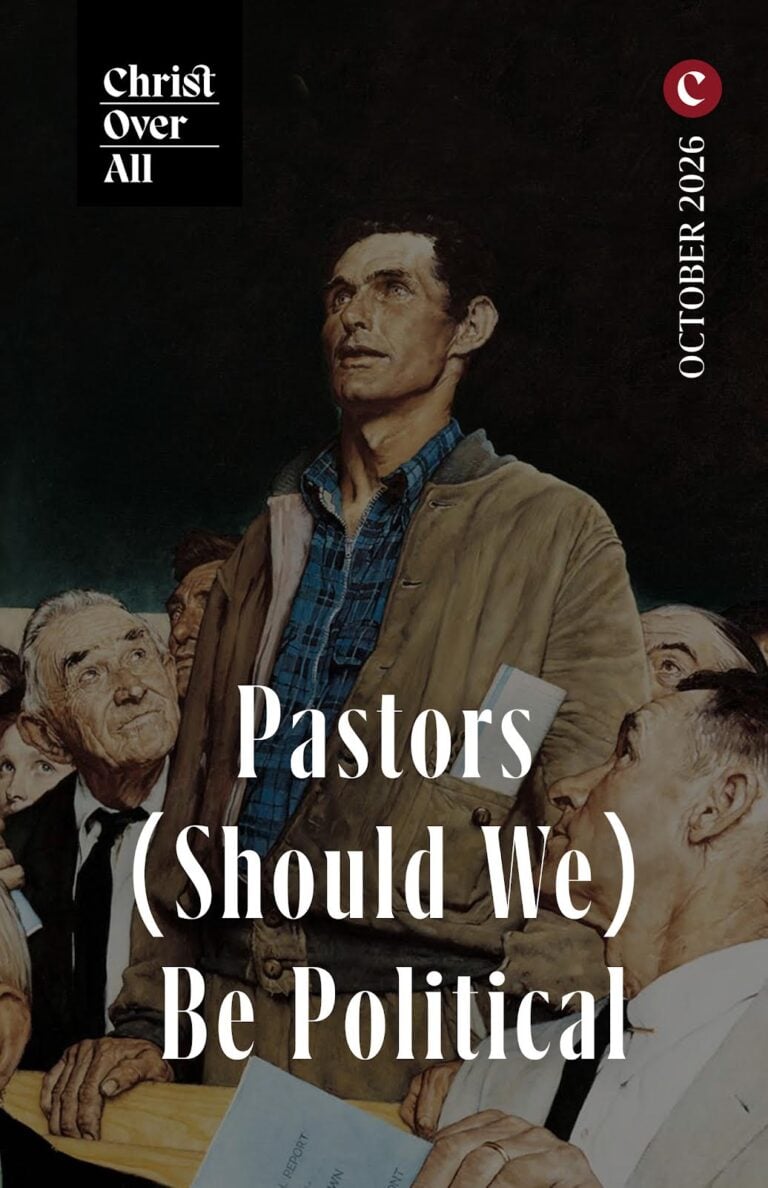
The First Amendment to the US Constitution is a national treasure. It guarantees the free exercise of religion, speech, the press, and peaceable assembly. No other nation, not even the UK, provides this level of protection for dissidents. To be sure, our First Amendment didn’t spring full-blown from Judeo-Christian, Western Civilization. You don’t have to be a professional historian to recognize the names of professing believers who abused heretics. Remember the 1527 drowning of Anabaptist Felix Manz by the Reformers in Zurich; Michael Servetus’s treatment in John Calvin’s Geneva, 1553; and the Puritans who hanged Quaker Mary Dyer in Boston in 1660. The pushback literature is vast, to include Foxe’s Book of Martyrs, rehearsing the execution of English Protestants by the country’s Catholics and Roger Williams’s 1644 The Bloudy Tenent of Persecution for the Cause of Conscience.[1] Recall, too, the names of Torquemada (Grand Inquisitor of Spain); Joan of Arc (burned at the stake for heresy in France); Girolamo Savonarola, whose “Bonfire of the Vanities” consumed worldly literature, but who was himself executed by fire.
Providentially, Christianity has antibodies in its bloodstream—biblical warrant, indeed a mandate, to ensure our fellow citizens’ free speech. No, not absolutely free speech. You may not cry “Fire!” in a crowded theater, libel your neighbor, make fraudulent claims in business, solicit child pornography, etc. Still, the United States ensures a constitutionally nurtured, dialogical free-for-all. The results are often deplorable, as tools for the Father of Lies do their worst. But, as Muslim and Communist countries around the world demonstrate, the absence of such discourse is vastly more appalling.
We Christians more readily resonate to the Lord’s, “Come now, let us reason together” (Isa. 1:18) and Paul’s “We seek to persuade [not coerce] men” (2 Cor. 5:11). We don’t legislate or litigate to secure nominal conversions. Neither are we anxiously fastidious in policing the gainsayers and the agents of alien conceits. Rather, we depend upon faithful witness, confident that God will render our words effectual according to his good pleasure.
Islam and Free Speech
Islam, on the other hand, is terrified of freely expressed religious alternatives. And neither the Quran nor the Hadith will compel them to let the infidels in their midst speak publicly on matters of faith and practice when they conflict with the Muslim manuals. (Yes, there can be differences between “desert” Islam (severely doctrinaire) and “island” Islam (less strict, sometimes even syncretistic) in these matters, but these are differences of degree, not kind.)
Perhaps you read of the strictures that bound American Christian chaplains who served our troops who were protecting Saudi Arabia during Operation Desert Shield (1990–91). These men were required to remove or cover their cross insignias when they ventured onto the streets of Dhahran, even as the city braced for attack.[2] The Saudis treated these hints of life-giving Calvary as Kryptonite.
Muslims in America are free to knock Christianity, but woe to the Christians who criticize Mohammed’s way when visiting or residing in their districts. In Amman, I was surprised and pleased to read an op-ed in the Jordan Times on honor killings. Queen Noor, the author, urged Muslim men to back off since the jails were filling up with sisters, daughters, and cousins in protective custody.[3] As queen, she could get away with it, but unthinkable would be a follow-up letter to the editor offering hearty Amens from a Christian who commended his own faith as a wholesome alternative.
Granted, I’m grateful for the speech-protection our Midwestern Baptist Theological Seminary bike team enjoyed on an evangelistic trek up the Nile (at least until they figured out what we were doing). The Muslim terrorist group al-Jama’a al-Islamiyya had recently slaughtered tourists outside the Egyptian Museum in Cairo and in the Valley of the Kings at Luxor (ancient Thebes), and the nation had suffered a precipitous drop in tourism, costing it untold millions. So, the government provided us jeep-mounted armed guards for the entire 150-mile trek. But when they discovered that we were handing out tracts, they confined us to our hotel in Aswan.
We Can Injure Ourselves
SBC statesman Herschel Hobbs told the story of the fellow who whistled as he walked through a graveyard at night.[4] When someone asked him if he was afraid the dead might hurt him, he replied, “No, I’m afraid they might make me hurt myself.” And, so, it is with Muslim thuggery in distant lands. The world was aroused (whether by disgust, fear, or delight) by the foiled plot to bomb the Jyllands-Posten newspaper office in Denmark in 2010.[5] They’d published cartoons mocking Islam (one portraying Mohammed with sticks of dynamite in his turban). Of course, this sort of behavior had a chilling effect on the Scandinavian publisher, though the paper soldiered on in 2020, to publish a version of the Chinese flag, with its yellow stars converted to COVID particles. Again, brave folks.
Not so brave were the folks of Yale University Press, who declined to print the images in a book entitled The Cartoons That Shook the World.[6] Nestled in thoroughly liberal New England, they were intimidated by the prospect of Muslim violence on their own turf, and it came out that they were concerned that such publication could chill European sales, where librarians and booksellers might be cowed by the prospect of Muslim raids on their establishments—certainly a live possibility in feckless England. After a host of embarrassing overreaches in the UK to squash “hate speech” against Muslims (e.g., here,[7] here,[8] and here[9]), in the spring of 2026 the government scrambled to deflect criticism while still forbidding “prejudicial stereotyping.”[10]
Of course, this is not just a British problem. Immigrant Muslims in the US can pick up the charmed language of victimhood, and well-meaning citizens can fall all over themselves to accommodate the feelings of the newcomers. Thus-muzzled and primed to squelch criticisms of Islam, these citizens begin to act as though they’ve left plain-speaking, life-giving, First Amendment Land and, for practical purposes, submitted to the conversational strictures of Ethiopia or Iran—catnip for American politicians amenable to this debacle.
Impoverished Discourse
These are tough days for daily newspapers, and I’ve seen two-newspaper cities slip back to single-service towns, as did Nashville, when the afternoon Banner disappeared, leaving only the Tennessean.[11] A sad sight, I think, but not as sad as the appearance of essentially one-newspaper countries. I discovered this when, for a number of years, I was supplying links to a daily-news feature at Kairos Journal, where my task was to scan the globe (using, for example, this[12] and this[13] link) for items connected with faith, ethics, and public policy.
Early on, I discovered that predominantly Muslim nations often had only a single substantial voice at the national level, and it was clearly beholden to the government. Typically, I’d, instead, turn to continent-wide sources (e.g., allAfrica.com[14]) for the best coverage. In contrast, England alone offered up a dozen national publications of opinion (e.g., the Guardian, Times, Telegraph, and Independent).
We speak of “the Arab Street” as a place of uninformed furor, while the expression, “American Street,” doesn’t make sense. Rather we scrappy Yanks talk variously of leftist riots, conservative rallies, and such, all laden with literature, bolstered by the print and online versions of their causes.
In a Kairos Journal booklet comparing Israel to its Muslim neighbors, we observed
There are more than 40 print newspapers in Israel, with more than 20 of them appearing daily—half again as many as one finds in metropolitan Chicago, whose population is roughly the same as Israel’s . . . In addition, there are many online papers published jointly with their print editions or as stand-alone electronic periodicals. Some typically take the side of the nation against its detractors (e.g., debka.com) others are more critical of Israel (e.g., btselem.org).[15]
Technologically Parasitic
While bookstore browsing in the main airport of a Muslim-majority nation in Southeast Asia, I was surprised to come across a 2006 title, Malaysia and the Club of Doom: The Collapse of the Islamic Countries. The author was himself a Muslim who urged greater attention to the Qur’an. By his lights, “all the 22 members of the Arab League today are basket cases.”[16] And, to bolster his assessment, he cited a Dr. Farrukh Saleem who’d reported that 57 Muslim countries combined had fewer than 600 universities, whereas India had 8,407 and the US 5,758; that only one percent of Arabs had a computer; that “1.4 billion Muslims have produced eight Nobel Laureates while a mere 14 million Jews had produced 167 Nobel Laureates; and that 60 percent of Muslims are illiterate compared to 22 percent of “Christendom.”[17] Furthermore, as Niall Ferguson observes in his 2011 book, Civilization: The West and the Rest, “Between 1980 and 2000 the number of patents registered in Israel was 7,652 compared with 367 for all of the Arab countries combined.”[18]
This sort of disparity shows up when there’s a call for extraordinary technology. Other nations are prepared to step up while Muslim nations remain on the sidelines. They’ve been crippled by suppressing the clash of scientific theories, often espoused by less-than-devout scientists, and also, oddly enough, by evincing a centuries-old reluctance to speak of scientific “laws,” a notion implying that Allah has to exert effort in breaking them to work his miracles.
The deficit showed itself in 2010, when 33 Chilean miners were trapped 2,000 feet underground. To aid the rescue, video equipment came from Japan; the retrieval cable from Germany; drilling technology from America as well as a hyper-nutritional, liquid diet from NASA; ascent capsules and the winch/pulley system from Austria; and a cell phone with projector from Korea.[19] Yet no R&D fruit from the Islamic Ummah.
In this same vein, the Taliban were often pictured manning Toyota Hilux pickups mounted with Russian machine guns salvaged from the Afghan war.[20] Christendom had produced Chevys, Volvos, Fiats, VWs, Renaults, and MGs. And the only traditionally Buddhist countries in a position to supply them options were Japan and Korea—nations who’d been heavily influenced by the West. Commodore Perry shocked the former out of isolation in 1853;[21] as for the latter, in 1973, it provided Billy Graham with the largest crowd he ever addressed face to face—1.1 million.[22] The more isolated Buddhist countries—Thailand, Cambodia, Myanmar, and Sri Lanka—have yet to produce a car. Not surprisingly, nobody in the hills of Afghanistan urged, “Next time, let’s get a Libyan pickup.”
The Contribution of “Infidels”
Make no mistake, the richness of Western culture is not purely the product of regenerate people, but also the fruit of unbelievers whom born-again people are pleased to protect and honor. Think, for instance, of Thomas Paine, an early abolitionist whose Common Sense supplied motivation for the American Revolution.[23] And, in the twentieth century, we had a host of skeptics to thank, including Upton Sinclair, whose novel, The Jungle, helped bring reform to the meatpacking industry, both with regard to cruelty to animals and hygiene;[24] Linus Pauling, winner of the Nobel Prize in Chemistry, whose work paved the way for understanding DNA;[25] Richard Rodgers, whose musical scores for such shows as Oklahoma!, The King and I, and The Sound of Music delighted audiences;[26] and Steve Wozniak, who cofounded Apple.[27]
This openness to “heathen” contributions is grounded in Christianity’s respect for common grace and, yes, “unalienable rights,” cited in the Declaration of Independence. It’s congruent with the words of Basil the Great:
Let’s take on board everything in pagan literature that encourages us to pursue worthwhile things. We also have the virtuous deeds of pagans, either documented in history, in accounts passed down in unbroken tradition, or set down on paper by poets or writers of prose. The example of these virtuous deeds should also edify us.[28]
And John Milton, who wrote in Areopagitica (the title drawn from the Greek for ‘Mars Hill’):
I cannot praise a fugitive and cloistered virtue, unexercised and unbreathed, that never sallies out and sees her adversary, but slinks out of the race . . . Assuredly we bring not innocence into the world, we bring impurity much rather: that which purifies us is trial, and trial is by what is contrary.[29]
First Amendment Affidavits
When I lived in Evanston, Illinois, Muslims in Villa Park were indignant that the city was dragging its feet in rezoning a public-school building to allow for a mosque.[30] Their hue and cry was Jeffersonian, demanding their share of the American dream. It raised in my mind the question of whether they were similarly respectful of First Amendment concerns in their countries of origin. It prompted me to suggest that we might ask whether they were so convicted back in the day, or did they sign off placidly on dhimmitude and suppression of other faith (or unfaith) groups. This led me to suggest that those seeking US residence should supply vetted, “First Amendment affidavits” from non-Muslims in their countries of origin.[31] If, on their own soil, they showed no regard for a Bill of Rights buffet, we don’t need them in our American kitchen.
End Notes
Roger Williams, The Bloudy Tenent of Persecution, for Cause of Conscience, Discussed, in a Conference betweene Truth and Peace (London, 1644). For a modern critical edition, see Roger Williams, The Bloudy Tenent of Persecution for Cause of Conscience, ed. Richard Groves (Macon, GA: Mercer University Press, 2001). See also John Foxe, Actes and Monuments of These Latter and Perillous Dayes (London: John Day, 1563), popularly known as Foxe’s Book of Martyrs. ↑
Kenneth Lasson, “Religious Liberty in the Military: The First Amendment Under ‘Friendly Fire,’” in International Perspectives on Church and State, Studies in Jewish Civilization 4, ed. Menachem Mor (Omaha: Creighton University Press, 1993), 89–114, esp. 89–92. Lasson documents that during Operation Desert Shield/Storm U.S. policy required service members to obscure religious identifiers and that U.S. commanders accommodated Saudi restrictions on Christian and Jewish symbols. ↑
On honor killings in Jordan and the press and royal-family response, see Rana Husseini, Murder in the Name of Honor: The True Story of One Woman’s Heroic Fight Against an Unbelievable Crime (Oxford: Oneworld, 2009). See also Noor, Leap of Faith: Memoirs of an Unexpected Life (New York: Miramax Books, 2003). ↑
On Hobbs’s life and ministry, see Herschel H. Hobbs, My Faith and Message: An Autobiography (Nashville: Broadman & Holman, 1993). ↑
Jytte Klausen, The Cartoons That Shook the World (New Haven: Yale University Press, 2009). The twelve cartoons were published on 30 September 2005. ↑
Klausen, The Cartoons That Shook the World. The Press declined to reproduce the cartoons in the volume, citing security concerns; see also “Cartoon Controversy Continues,” Yale Daily News, November 29, 2009, https://yaledailynews.com. ↑
“‘Really, Really Orwellian’: British Man Arrested at Home in Middle of the Night for Anti-Hamas Tweet,” CBN News, 30 September 2025, https://cbn.com. ↑
“Police Arrest Christian Pastor and Visit His Home After He Commented on Islam and Transgender Ideology While Street Preaching,” ADF International, 16 February 2026, https://adfinternational.org. ↑
Gregory Katz, “British Man Charged with Race Crime after Anti-Muslim Tweets,” Associated Press, March 25, 2016, https://apnews.com. ↑
UK Government, “A Definition of Anti-Muslim Hostility,” GOV.UK, published 9 March 2026,
https://www.gov.uk. ↑The Nashville Banner, the city’s afternoon daily, ceased publication in February 1998 after 122 years, leaving The Tennessean as Nashville’s only major daily. See “Nashville Banner,” Tennessee Encyclopedia (Tennessee Historical Society), https://tennesseeencyclopedia.net/ (accessed 24 June 2026). ↑
OnlineNewspapers.com is a global directory of newspapers. ↑
World-Newspapers.com is an international directory of newspapers, magazines, and news sites. ↑
AllAfrica.com is a pan-African news aggregator providing continent-wide reporting. ↑
Israel and Legitimacy, Kairos Journal Occasional Paper KJOP-03 (Kairos Journal, 19 September 2012), https://www.kairosjournal.org (accessed 24 June 2026). ↑
Syed Akbar Ali, Malaysia and the Club of Doom: The Collapse of the Islamic Countries (Kuala Lumpur: Syed Akbar Ali, 2006), chapter one. ↑
The figures, as quoted by Syed Akbar Ali, originate with Farrukh Saleem, “Why Are Jews So Powerful and Muslims So Powerless?,” first published in The News International (Islamabad) and widely reprinted (c. 2007–2008). See Ali, Malaysia and the Club of Doom (2006). ↑
Niall Ferguson, Civilization: The West and the Rest (London: Allen Lane, 2011), 93. ↑
See Neil Schoenherr, “Chilean Miners Were Saved by Collaboration,” The Source (Washington University in St. Louis), October 14, 2010, https://source.washu.edu (accessed 24 June 2026); and “Chilean Miners Rescue Oral Histories,” NASA, https://www.nasa.gov (accessed 24 June 2026). ↑
On the Toyota Hilux as the favored “technical” of insurgent forces, including the Taliban, see Andrew Bast, “Why Rebel Groups Love the Toyota Hilux,” Newsweek, 14 October 2010, https://www.newsweek.com. ↑
See Samuel Eliot Morison, “Old Bruin”: Commodore Matthew C. Perry, 1794–1858 (Boston: Little, Brown, 1967). ↑
See “June 3, 1973: Billy Graham Preaches to 1.1 Million in Korea,” Billy Graham Library, https://billygrahamlibrary.org/june-3-1973-billy-graham-preaches-to-1-1-million-in-korea/ (accessed 24 June 2026); and “1973: Seoul, South Korea,” Billy Graham Evangelistic Association of Canada, https://www.billygraham.ca(accessed 24 June 2026). ↑
Thomas Paine, Common Sense (Philadelphia: R. Bell, 1776); see also “African Slavery in America” (1775), attributed to Paine. ↑
Upton Sinclair, The Jungle (New York: Doubleday, Page, 1906). ↑
On Linus Pauling (1901–1994), see Thomas Hager, Force of Nature: The Life of Linus Pauling (New York: Simon & Schuster, 1995). ↑
On Richard Rodgers (1902–1979) and his scores for Oklahoma! (1943), The King and I (1951), and The Sound of Music (1959), see Meryle Secrest, Somewhere for Me: A Biography of Richard Rodgers (New York: Knopf, 2001). ↑
Steve Wozniak with Gina Smith, iWoz: Computer Geek to Cult Icon—How I Invented the Personal Computer, Co-Founded Apple, and Had Fun Doing It (New York: W. W. Norton, 2006). ↑
Basil of Caesarea, Address to Young Men on the Right Use of Greek Literature (Ad adolescentes, c. 370). A standard translation appears in Saint Basil, The Letters, vol. 4, trans. Roy J. Deferrari and Martin R. P. McGuire, Loeb Classical Library 270 (Cambridge, MA: Harvard University Press, 1934), 378–435. ↑
John Milton, Areopagitica (London, 1644). A modern text is in Areopagitica and Other Writings, ed. William Poole (London: Penguin Classics, 2014). ↑
“Muslims Cite Long Struggle in Suburbs,” Chicago Tribune, July 17, 2000, https://www.chicagotribune.com. ↑
Mark Coppenger, “Should Immigrants Bear First Amendment Affidavits?,” The American Spectator, December 11, 2015, https://spectator.org ↑