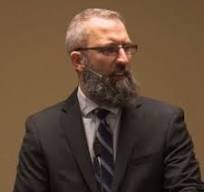
In 2021, I spent 21 days in jail. A tiny slit of a window and a large metal door were all that broke up the continuous concrete of my small cell. The furniture, if you could call it that, consisted of a bunkbed, desk, and toilet. The “beds” were platforms bolted to the wall with a mattress the thickness of a felt pad. Besides the bed sheets, there were no pillows or other luxuries one might expect. The “desk” was similarly fixed to the opposite wall with a matching stool bolted to the ground. It was sufficient for me to place my food tray on while my fellow inmate ate sitting on his bed. The toilet, open and seen from every part of the cell, was stainless steel and multipurpose, having a small sink and fountain built into the back. To use the toilet, one had no choice but to undress given the impracticality of the one-piece prison coveralls. Personal privacy is foreign in prison. However, my cellmate, a repeat offender, demonstrated how you can sit under your bed sheet to maintain a shred of dignity.
While you don’t have freedom, family, friends, or your phone in prison, you do have time. I spent twenty-three and a half hours a day in my cell, leaving 30 minutes to call my wife, speak with lawyers, shower, and share Christ with other inmates. Beyond those few minutes, I had plenty of time to think. One of those thoughts was this: Why am I here? The answer to that question depends on who you ask.
If you read the media reports, I was in prison for violating an order of the court dictating that I comply with the lawful restrictions passed under the Public Health Act. In simple terms, I was a danger to the public safety by flouting COVID restrictions. However, if you ask me, I was in prison for refusing to allow the state to dictate the terms of worship. Christ is King, Lord of all, and worthy of his worship. As Scripture teaches, he calls the church to gather in worship, break bread, sing, and care for one another—both in good times and bad, in sickness and distress. Yet, all these commands were forbidden or restricted by Canada’s governing authorities for months on end during 2021.
As a pastor, I continued to lead our church to gather in obedience to Christ. And so I was in prison for Christ, my conscience captive to his word, and my convictions forged by months of wrestling through the issues of our day with Bible in hand.
Reports of my imprisonment during the COVID pandemic went far and wide. I became known as a “political” pastor. Many assumed my conduct was out of step with the teachings of the New Testament and the example of Jesus. But the opposite is true. What follows in this essay is how following Christ and the teachings of Scripture led me to be “political,” along with the objections I faced, and the lessons I learned along the way.
Imitating Paul as he Imitated Christ
Why was the Apostle Paul imprisoned? It depends on who you ask. The Jews accused him of teaching against the law, defying Moses, and defiling the temple (Acts 21:28). To the Romans, he was a public nuisance, disturbing the Pax Romana (Acts 24:5–6). The Macedonians accused him of sedition and treason against Caesar (Acts 17:7). What did Paul think? He claimed to be imprisoned on account of the gospel (2 Tim. 1:8).
Why would Paul do that? He tells us in multiple places that he imitated Christ. And he urged others to imitate him too.
Was not Jesus tried and killed as an insurrectionist and enemy of Rome? Or was it because of the envy of the religious leaders? Or was it the Father’s loving plan and the Son’s self-sacrifice that explains the cross? Again, it depends on who you ask.
It undoubtedly happens that when a Christian leader takes a stand on a controversial, public issue some will conclude he has lost the plot and become “political”—a strangely pejorative term in our day. Surely, Christians should not be insurrectionists, scofflaws, or disturbers of the peace. However, Christians who stand firm in the faith will bring the Bible to bear on private and public matters. And that means that to a twisted and perverse generation they will be viewed as insurrectionists, scofflaws, and disturbers of the peace.
Christians, and pastors especially, have a duty before God, out of love for Christ, to speak the truth and be salt and light in the place where God has them. Salt stings in a festering wound and those who want to hide their deeds hate the light. The accusations from those feeling salt’s sting or being exposed by truth’s light should never dissuade us from being faithful to our Lord. Rather, when you start receiving flak, know you’re over the target.
My Unavoidable Journey in “Getting Political”
The truth is that a faithful pastor cannot avoid being political. I’ve been a pastor in Calgary, Alberta, Canada for 12 years and Canada is world-famous for its progressive ideology. Here is a sample of Canada’s current conditions.
- There are no laws restricting abortion in any sense.
- Medical Assistance in Dying (a euphemism for euthanasia) is enshrined as a right, now accounting for one in 20 deaths in our country.
- LGBTQ ideology is firmly entrenched in our legal system.
- Gay marriage has been the law of the land for decades and recently, three gay men (a throuple) legally even adopted a 3-year-old girl.
- It is against the law to counsel someone to embrace their God-given gender rather than affirming their gender identity.
- Our federal government requires an intersectional evaluation or gender-based analysis for any major infrastructure project like a pipeline or railway.
- Our military is being gutted from the inside out as government reports say the entire system is structurally racist.
- We have a dedicated federal department implementing climate change ideology.
- DEI is firmly entrenched, requiring hiring quotas for all federally regulated employers.
- Judges must consider systemic racism and colonialism when sentencing Indigenous offenders.
The list could go on. But our country makes California feel like a bastion of conservatism.
All these issues are political issues. More importantly for the Christian, all these issues are moral, anthropological, and even spiritual issues. There is an unavoidable collision between Christianity and the political issues of our day. So I could not be faithful as a pastor without addressing these issues and bringing the Bible to bear. While some contend that our church has veered out of our lane and become political, I would argue that it is our government who has veered from its lane and become religious. Our officials have presumed to redefine marriage, sexuality, gender, the sanctity of life, family, justice, and countless other ethical and religious issues to which God clearly speaks.
In this setting, to confess Jesus Christ as Lord, is to be political. That basic and fundamental confession is political dynamite in a society that worships another lord. In Acts 17, as Paul and Silas came to Thessalonica and caused no little disturbance, the charges against them were clear: “They are all acting against the decrees of Caesar, saying that there is another king, Jesus” (Acts 17:7).
Preaching Christ as Lord has unavoidable political ramifications. I firmly maintain that the church should have limitations: it should not be partisan, nor beholden to doing the will of one political party. It must not replace sermons with stump speeches, or rally for legislative change apart from the proclamation of the saving gospel of Jesus Christ.1 However, if being political is to engage in the issues and ideas that affect the public square with God’s word, then the church of its very nature is extremely political. Jesus Christ is King of kings and Lord of lords. He is King over Caesar. He is King over the Prime Minister and the President. It is not only that he will be King; Jesus is presently “the ruler of kings on earth” (Rev. 1:5).
1. This doesn’t mean the church shouldn’t rally for legislative change. Pastors and church members should show up to their local legislative meetings and contact their representatives, and they need not preach the gospel in every instance. Our church has hosted town hall events, encouraged members to be political candidates, been involved in rallies, and encouraged our members to be active in civic life. As a pastor, I’ve given clear guidance during elections, written many articles on public policy, spoken at rallies, met with political leaders, and encouraged others to be involved in the political process as their civic and God-given duty.
Over the years, as I’ve guided our congregation through the ethical shift happening in our nation, I’ve beaten the drum that while the Bible doesn’t speak about everything, it does speak to everything. Whether that is legalizing marijuana, conversion therapy bans, online censorship laws, climate catastrophism, or COVID lockdowns, the Bible speaks. The church, as the pillar and buttress of the truth (1 Tim. 3:15), has that prophetic role to stand before the kings and rulers of our age and say, “Thus saith the Lord! Christ is King. He has spoken his law and gospel. Kiss the Son lest you perish in the way” (Ps. 2:12).
Repeated Objections
As I’ve sought to be faithful in confronting the lies of our age with truth, I’ve received pushback, not just from unbelievers, but from Christians who raise Romans 13, the separation of the church and state, and the need for being a good witness for Christ as three objections to speaking out loud and in public for the truths of Christ. Yet, none of these objections hold water, when they are punctured by the word of God. So let me address each below.
Romans 13: Obey Your Leaders
Like many, I’ve had to wrestle with Romans 13 and its command to submit to our civic leaders. Does this passage call Christians to remain in silent submission to our governing authorities when they substitute lies for truth or good for evil?
Moses did not allow Pharaoh to dictate the terms of worship. Peter and John did not remain silent when the religious leaders commanded it. While Romans 13 does call believers to submit to governing authorities (Rom. 13:1, 4), it also reminds governing authorities that they are God’s servants, entrusted to do his will and uphold his justice (Rom. 13:4). Who will direct them to their duty?
God is over all, instituting every authority (Rom. 13:1–2). As such, when governing authorities (1) command what God forbids, (2) forbid what God commands, or (3) command what God has not given them to command, then we must obey God rather than men (Acts 5:29). Christians must be loyal first and foremost to God, especially when governing authorities call for submission to an antichrist ideology.
However, in obedience to Christ, we must strive to honor our governing authorities even when they cannot have our obedience. If we suffer for doing good, then Christ serves as our example, calling us to refrain from reviling or threatening but entrusting ourselves to God (1 Pet. 2:20–23). It is for the sake of Christ and his word that when we speak against evil and direct our leaders to their duty, we do it with love, humility, and respect.
For this reason, the duty to resist tyrants in obedience to God is right, but only so far as such resistance is motivated by love for God and neighbor. Civil disobedience is never an end in itself. Rather, with the Word of God as our standard, any disobedience is motivated by love—even love for the enemies who persecute and imprison.
Separation of Church and State
Like Romans 13, it seems that every time I speak or write on a cultural flashpoint, the objection of separation of church and state rears its head. While most Christians and secular humanists have fundamental disagreements, both agree that the church and politics must never intersect. I’ve had many community members and online Karen’s seek to have our tax exemption or charitable status revoked because I spoke on a political issue. In our country separation of church and state is thought to mean that the public square must be free from any religious idea. God or Scripture must not make any public appearance; they must stay in the basement closet of the church with the flannel graphs and old Sunday School curricula.
In some ways, I’ve answered this objection already when we recognized that Christ is Lord over all. Such universal dominion necessarily includes church and state. Yet many people still assume that if pastors speak into political issues we’ll end up with some form of Christian sharia where clerics run the country and force Christianity upon the unwilling with the sword. Hardly!
Too many are ignorant that “Western” values like elected representatives, limited government, freedom of conscience, protection of life and property, checks and balances, presumption of innocence until proven guilty, and so on, are all products of Christian thought and influence. We enjoy our freedoms because of Christianity, not in spite of it.
In a similar vein, many Christians view God’s law negatively as repressive, restrictive, and antithetical to grace and love. This is ironic considering that Christ himself summarized the law as love for God and love for neighbor. We’re told in Romans 13:10 that love is the fulfilling of the law. The law, therefore, is not antithetical to love, but the sum and substance of it. There is nothing more loving than sharing with our neighbors what the law of love says about the pressing ethical matters of our day. The law speaks to the affairs of the state (1 Tim. 1:8–11; Rom. 13) just as it does the church (2 Tim. 3:16–17).
Paul was guiltless because he declared the whole counsel of God (Acts 20:26–27). He preached it to Jews, Gentiles, and civic rulers, just as Christ commanded (Acts 9:15). Pastors today must similarly share the whole counsel of God, including the terror of God’s wrath against sin, the wisdom of his law, and the wonders of his mercy in Christ. The word of God is not bound (2 Tim. 2:9)! It is time to bring the full weight of God’s Word from the basement closet and lets its light shine on every square inch of Christ’s world.
A Poor Witness
A third objection that frequently comes up is that of witness. When reports of my first fine hit the media, our church was inundated with hate mail. One might think that such hatred came from unbelievers or enemies of the church, but actually many Christians argued arguing that we were being a terrible witness for Christ.
When a stand is taken against the prevailing culture, one cannot help but be labeled as prideful, pugnacious, greedy, attention-seeking, obstinate, bigoted, and hateful. Of course these epithets are very unchristian and, if true, would certainly be a harmful witness for the church. But consider the model of Paul and Jesus. They too were maligned and called names. And yet, this only proved their witness.
Today, many Christians are taken by a tactic that assume that if the world disapproves of you, you are not being a good witness for Christ. The effects of the seeker sensitive movement are still seen when people assume that if the world likes us, they’ll like Jesus too. However, to be a faithful witness one cannot be a friend of the world. In fact, friendship with the world is enmity with God (Jas. 4:4). To be a witness, is to suffer reproach—or worse—for what they believe. A witness demonstrates his belief by standing firm against the tide of public pressure crashing against him, not yielding to it.
I admit, when publicity first came to our church, my initial inclination was to shrink back and hide. Being a witness for Christ is hard. But Christians, and especially pastors, have a divine call to go, stand, and speak, even if that means suffering reproach (Acts 5:20). That is the real witness the church needs. And as the world gets more hostile, the need for such witnesses only increases.
The Fruit of Faithfulness
The objections above are united in purpose: gagging God. If God is silenced and the light of God’s word is kept under a basket, there will be a great darkness. But when the light of the word shines forth, it gives light to all in the house and God is glorified (Matt. 5:15–16). I’ve had the privilege of seeing God’s word shine forth in the darkness and produce its God glorifying fruit.
Courage for the Church
Sheep are not known to be courageous. Left to themselves they will be misled, and without a shepherd they will be lost (Matt. 9:36). For that reason, God gave his people shepherds after his own heart (Jer. 3:15). And so, when Christ’s undershepherds lead the church from the front rather than follow from the rear, the sheep are protected, comforted, and directed. The church family needs to be equipped to withstand all the lies that the world throws at them. And that means that pastors need to help navigate dangerous cultural waters with wisdom, courage, and love.
Leaders need courage too. Blows come from every side when you wade into a fight where the battle rages hottest. But in that battle zone you’ll encounter other faithful warriors who encourage and strengthen you. In Canada, fellow pastors James Coates and Jacob Reaume became dear to me as we sought to lead our congregations through a difficult season. I love these men and we will be brothers for life.
Courage begets courage. Faithfulness under fire is contagious. And wise pastors will surround themselves with faithful men, not feckless, fainthearted men. Brother-pastor, find men who are warmhearted, gospel driven, and battle ready. Lead the church with courage and see a courageous congregation live faithfully for Christ.
Too many leaders pore over hypotheticals. How will this affect my popularity? Will some people be offended and leave? Will this hurt my witness? To these, walk by faith, not sight. Don’t be overly pragmatic. Be willing to say what God’s word says and entrust him with the consequences. The church will be strengthened, good works will abound, and God will be glorified.
Gospel Opportunities and Transformed Lives
I admit, as a “political” pastor, I haven’t seen much political fruit. I can’t recall any changed laws or candidates elected, or party policy effected—but praise God, I have seen a harvest of souls.
I have had the pleasure of witnessing God’s grace save and transform the lives of many while confronting the culture. The earthly means of that salvation was through words directing people to the supremacy of Christ, the goodness of his law, and the greatness of the gospel. While many visitors to our church today don’t even know about my imprisonment five years ago, we still baptize people who say our church’s witness during COVID was a turning point in their lives.
Our church has tripled in size as church growth gurus warn against wading into controversy. Yes, you might lose the crowd if you take a controversial stand, but it will build the church when Christ is at the center. I thank God for each soul saved by his grace as the word of God was brought to bear on the pressing issues of the day.
Keeping the Main Thing the Main Thing
Finally, it has been my endeavor in the public square to emphasize as a matter of first importance that I want people to know Christ and be forgiven of their sins. I desire to see God’s miracle of salvation in the souls of men more than political change or ethical reform. When we host public forums discussing political issues, I tell our community this and plead for their souls. A Christian home is not one where there is simply Christian rules or morality, but where there is the new birth—regenerate hearts that love Christ. I want my city and nation, not just to be reformed, but reborn through the gospel of Christ. As pastors, called to be shepherds of souls, we must keep the main thing the main thing and preach Christ and him crucified (1 Cor. 2:2).
To that end, fear the Lord, preach Christ, be political, and don’t be afraid of the blowback.